Project for a Troller
mixed media
28” x 25” x 4”
2006
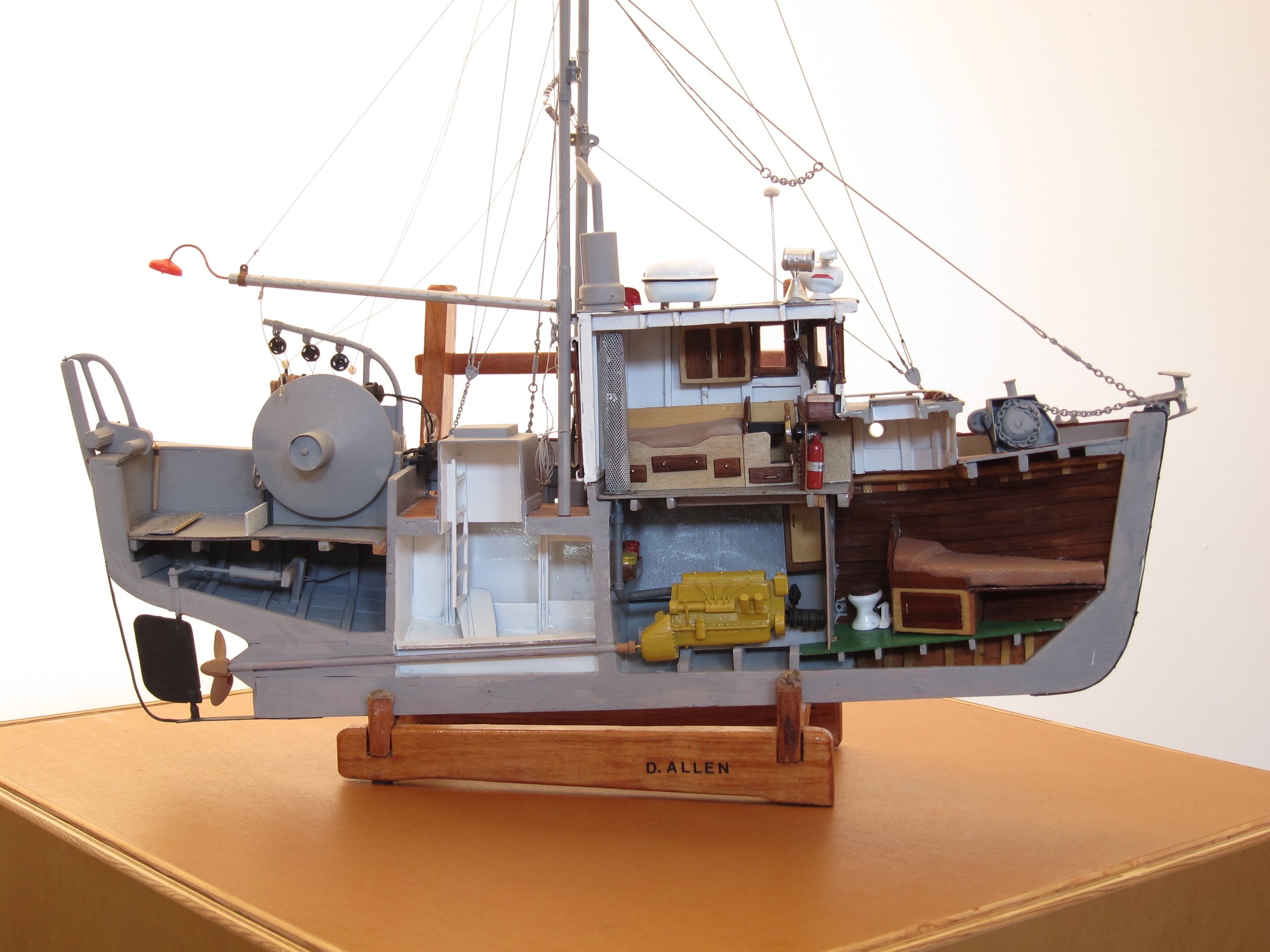
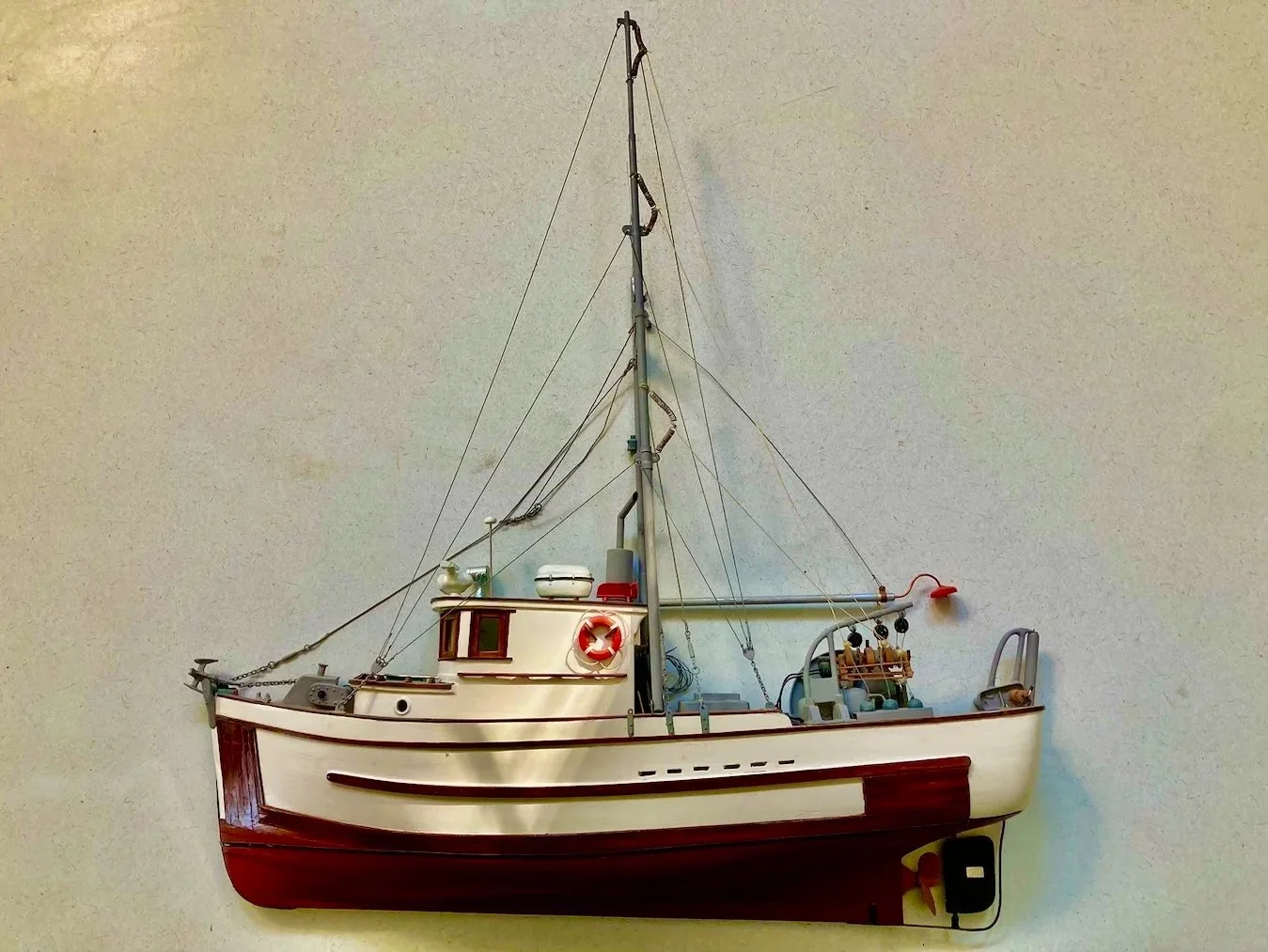
Referring to either the boat or the fisher, the troller is an icon of solitary independent entrepreneurship, a traditional mainstay of the west coast fishing industry. Project for a Troller would use an actual working salmon troller, split in half lengthwise along its axis, and mounted in an appropriate location. (Mounted into the outside of a building’s wall, with the interior visible on the inside of the wall, would be ideal.) This example represents a ‘combination boat’, equipped for either trolling or gillnetting, depending on which fishery was currently open. The cutaway gives immediate visual access to the boat’s interior, revealing a well-organized and highly functional self-contained working and living environment, for one or two people. Every boat had a wheelhouse with all-round visibility, for steering, navigation, protection from the weather, eating and social interaction, and a diesel stove for cooking and warmth; a cockpit at the stern (where most of the work took place) held a secondary steering and control station, and 3- or 4-spool hydraulic down riggers, called gurdies, on either side, for lowering or raising the fishing gear when trolling, and a space for sorting and cleaning fish, called the ‘checkers’; a large spool just forward held the net for gillnetting; a capacious fish-hold, loaded with ice at the start of each trip, stored the iced-down catch for the duration of the trip (usually a week to ten days); an engine room, for mechanicals, hydraulics, tools and fuel tanks; a foc’sle with bunks for sleeping and personal gear; and a foredeck with windlass and anchor (boats typically would anchor on the bank at night when fishing offshore.) Outrigger poles on either side would be let down when fishing to hold the downrigger lines away from the boat. Troll-caught fish, individually hooked on spoons or plugs and immediately cleaned and iced, commanded premium prices for their size and exceptionally clean appearance. Trolling allows for selectively-managed and sustainable fishing, while gillnetting, a more indiscriminate fishery, resulted in catches that did not command so high a price.
This model was built for the project by Doug Allen, a retired fisher/logger from Mill Bay, on Vancouver Island.